How to Choose the Right MCCB DC Breaker for Your Needs?
Choosing the right Mccb Dc Breaker can be challenging. There are many options available. A proper selection is crucial for safety and efficiency.
MCCB DC breakers protect electrical circuits from overload and short circuits. They help avoid equipment damage. However, not all breakers are the same. Specifications can vary widely. Some may not suit specific needs.
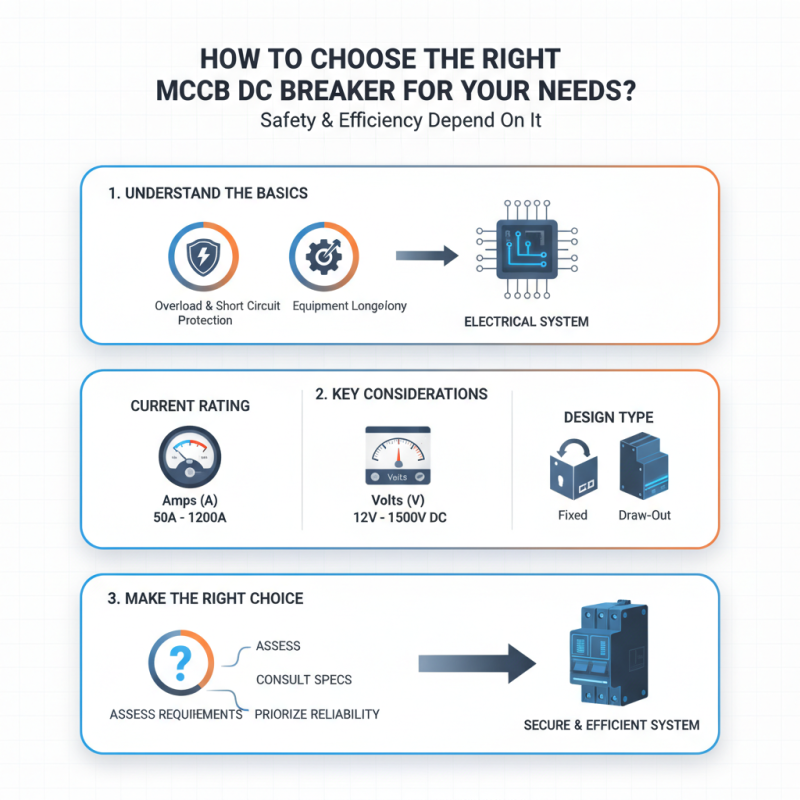
Consider factors like current rating, voltage, and design. Each detail matters. An unsuitable choice can lead to failures. Reflect on your requirements carefully. Avoid rushing the decision. This choice impacts reliability and safety in your electrical systems.
Understanding MCCB DC Breakers: Basic Concepts and Functions
MCCB DC breakers are essential components in electrical systems. They provide overcurrent protection for direct current applications. Understanding their basic concepts helps in making informed choices.
These breakers come in various ratings and specifications. It’s vital to match the breaker’s capacity with your system's load requirements. A mismatch can lead to safety hazards. Consider the voltage levels and potential short circuits. The design and features of the MCCB can differ significantly. This may complicate the selection process.
Installation requires careful attention. Incorrect connections can render the breaker ineffective. Regular maintenance checks are necessary to ensure reliability. Some users overlook this aspect, leading to unexpected failures. In essence, knowing the fundamentals ensures you select the right MCCB DC breaker for your specific needs.
Key Factors to Consider When Selecting an MCCB DC Breaker
Choosing the right MCCB DC breaker can be challenging. Understanding key factors helps streamline your selection process. Firstly, consider the specific application. Analyzing the rated current and voltage requirements is crucial. Data from industry reports indicate that improper sizing can lead to failure rates as high as 30%. This highlights the importance of accurate specifications.
Another factor is the breaking capacity. This describes the maximum fault current the breaker can interrupt safely. For example, many breakers have a breaking capacity ranging from 10 kA to 50 kA. Choosing one with an inadequate capacity may result in severe consequences. It's essential to err on the side of caution.
Environmental conditions also play a role. MCCB DC breakers may react differently based on temperature and humidity levels. Extremes can affect performance and reliability. Reports suggest that around 24% of installations face issues due to environmental factors. Reflecting on these details is vital. A well-chosen breaker boosts system safety and longevity.
Evaluating Ampere Ratings and Voltage Levels for Your Application
When selecting the right MCCB DC breaker, ampere ratings and voltage levels are crucial. The ampere rating indicates the maximum current the breaker can handle. Understand your system's requirements before making a choice. Underestimating these needs can lead to failures and safety hazards. Overrating a breaker can result in unnecessary costs and space usage.
Voltage levels also play a significant role in your decision. Breakers must match or exceed the voltage of your application. Using an under-rated breaker can cause overheating or failure. It's essential to analyze your voltage supply in detail. If you're uncertain, measuring equipment can help clarify specifics.
Not all applications are straightforward. Complexity arises when different loads require varied ampere ratings. Fault currents can change as well, adding another layer of difficulty. Consider all aspects of your setup. Incorrect assumptions may lead you to the wrong choice. Regular reviews of your breaker performance can offer insights for future selections.
Evaluating Ampere Ratings and Voltage Levels for MCCB DC Breakers
This chart illustrates the relationship between ampere ratings and corresponding voltage levels for MCCB DC breakers. As the ampere rating increases, the voltage level capability of the MCCB also increases, which is essential for ensuring suitable application in various electrical systems.
Assessing Protection Features and Trip Settings in MCCB DC Breakers
When selecting an MCCB DC breaker, protection features should be a priority. These features ensure that your electrical system operates safely. Look for breakers with adjustable trip settings. This allows customization according to the specific load and application. An adjustable trip setting can prevent nuisance tripping while still offering protection during a fault.
Consider the current and voltage ratings of the MCCB DC breaker. Ensure these ratings align with your system's requirements. Also, examine the breaking capacity. This determines how effectively the breaker can interrupt a fault. Insufficient breaking capacity could lead to dangerous situations. Take time to assess these details carefully; overlooking them can lead to costly mistakes.
Another point to ponder is the temperature rating. A breaker rated for high temperatures may not perform adequately in extreme conditions. It’s also wise to think about environmental factors. Dust, moisture, and vibration can affect the breaker's performance over time. This may complicate your choice. Therefore, it’s essential to evaluate not just the specifications but also the real-life conditions where the breaker will be used.
Comparing Manufacturer Options and Industry Standards for Quality Assurance
When selecting an MCCB DC breaker, quality assurance is crucial. Various manufacturers offer different options. Therefore, understanding industry standards can help ensure that you make the right choice. Look for breakers that comply with the relevant IEC or UL standards. This ensures safety and reliability.
Tip: Always check for certifications. A product with proper certifications provides peace of mind. Examine the materials used in the breaker. High-quality components often lead to better longevity and performance.
It's also important to consider the features of the breaker. Not all breakers are created equal. Some might have advanced protection mechanisms, while others may lack basic features. Reflect on what you truly need versus what looks appealing. Sometimes, the most expensive option is not the best fit for every application.
Tip: Seek expert advice if unsure. Industry professionals can offer insights tailored to your needs. This can prevent purchasing mistakes that may lead to costly setbacks later.