Why Choose Knife Valves for Your Industrial Needs?
In the realm of industrial applications, knife valves have become indispensable. They are robust, versatile, and efficient. John Smith, a leading expert in valve technology, emphasizes their importance: "Knife valves provide unmatched reliability in challenging conditions."
These valves excel in handling slurries and thick fluids. Their unique design allows for a clean shut-off and easy maintenance. However, not every operating environment is ideal for knife valves. Some users report issues with wear and tear. Regular maintenance is crucial for optimal performance.
Moreover, while knife valves offer many benefits, they may not be the best choice for all situations. It's important to evaluate specific needs before selection. Understanding the limitations is key to making informed decisions. Though knife valves are reliable, they require careful consideration in their application.
Understanding Knife Valves: Structure and Functionality
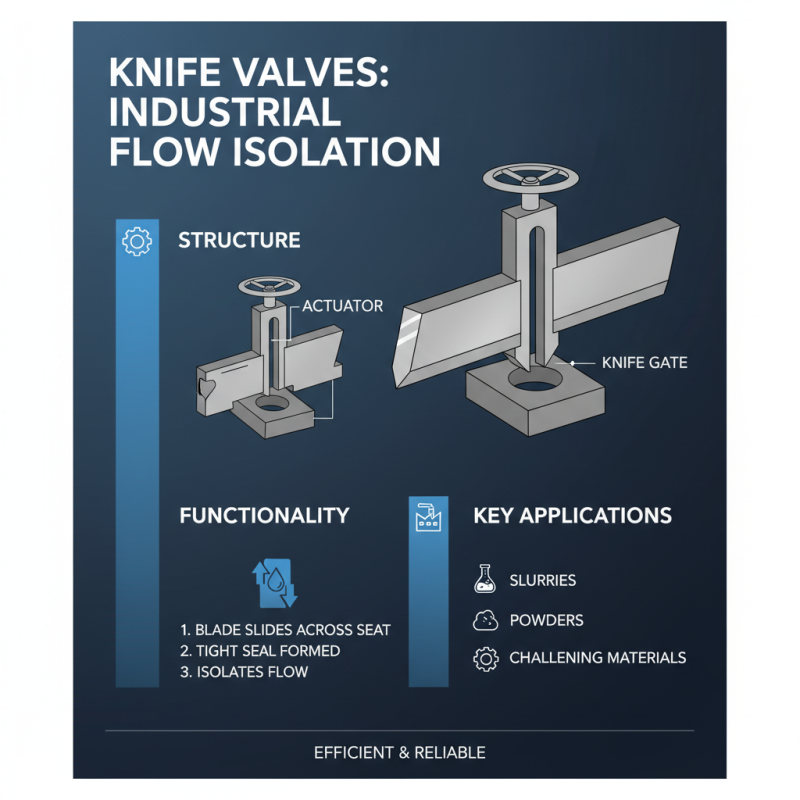
Knife valves are specialized components used in various industrial applications. Their structure and functionality are unique. These valves consist of a sharp-edged blade that slides across a seat. This design allows for effective isolation of flow. When fully closed, the blade provides a tight seal. This is essential in handling slurries, powders, and other challenging materials.
In terms of functionality, knife valves excel at cutting through tough media. They can handle heavy bulk materials without clogging. However, users may overlook maintenance needs. Over time, the blade can wear down or become damaged. This can compromise performance. Operators should regularly check alignment and seals to ensure efficiency. Understanding the structure and potential wear points can help maintain optimal functionality. Knife valves require careful consideration and awareness of operational conditions. This ensures they continue to perform effectively in demanding environments.
Advantages of Knife Valves in Industrial Applications
Knife valves have garnered attention in the industrial sector due to their unique advantages. They excel in handling slurries and bulk materials. According to a recent industry report, approximately 35% of processing plants prefer knife valves for their efficiency. These valves can cut through thick materials, providing reliable performance in abrasive environments.
One significant benefit of knife valves is their design, which allows for easy cleaning and maintenance. This is crucial in industries like pulp and paper, where residue buildup can lead to failures. The report notes that maintenance downtime can cost facilities over $20,000 per hour. Knife valves minimize this risk, making operations more efficient.
However, the use of knife valves is not devoid of challenges. Proper alignment during installation is essential. Misalignment can lead to premature wear and reduced lifespan. This factor requires careful consideration during the selection and installation process. Despite these considerations, knife valves remain a preferred choice in many industrial applications, thanks to their ability to provide effective solutions in tough working conditions.
Key Industries Utilizing Knife Valves for Efficiency
Knife valves are essential in various industries due to their unique design and functionality. They excel in handling slurries and thick materials. In the food processing industry, these valves ensure efficient flow control while minimizing contamination. Given the nature of food products, precision is key. Proper sealing prevents cross-contamination and maintains quality during production.
In the mining sector, knife valves are vital for managing abrasive materials. Their robust structure withstands wear and tear. However, users must consider maintenance challenges that come with such durability. Regular inspections can prevent unexpected breakdowns. In addition, the paper and pulp industry relies on knife valves for effective fiber flow control. Yet, there’s a constant need to evaluate their performance over time to avoid inefficiencies.
Industries benefit from the use of knife valves, but they must approach them cautiously. Choosing the right valve requires understanding specific operational needs. While knife valves are powerful tools, every choice comes with trade-offs. Keeping these factors in mind is essential for maximizing their efficiency and value.
Maintenance and Lifespan of Knife Valves in Operations
Knife valves are crucial in many industrial applications. Their design allows for efficient flow control, especially in handling thick or viscous materials. However, the maintenance and lifespan of these valves must not be overlooked.
Regular inspections are vital. Check for wear and tear. Accumulation of materials can lead to blockages. This can shorten the valve's lifespan. Proper cleaning can prolong functionality. Ensure that seals and gaskets are intact to avoid leaks. A proactive approach is key.
Tips for maintenance:
- Schedule regular maintenance checks.
- Keep the surrounding area clean to reduce contamination.
- Lubricate parts as recommended.
In operations, environment matters too. Extreme temperatures or corrosive substances can impact performance. Selecting the right materials helps. Consider conditions before installation. Sometimes, design flaws can lead to operational failures. It’s essential to evaluate and reflect on past performance to avoid future issues. Adjustments might be necessary for optimal function.
Comparing Knife Valves with Other Valve Types in Industry
Knife valves are gaining attention in industrial applications for a reason. They excel in handling slurries, thick liquids, and solid materials. Unlike traditional valves, they have a sharp blade. This blade slices through materials effectively. Many industries rely on them for their robust design.
When comparing knife valves to other types, it’s crucial to consider their durability. They can withstand harsh conditions. In contrast, ball valves and gate valves can struggle with abrasive materials. Still, knife valves aren’t without issues. They may require more maintenance over time. Their sealing capability can also be less reliable under certain conditions.
In some applications, other valves might be the better choice. For instance, if precision flow control is needed, a globe valve may perform better. Additionally, some environments may not be suitable for knife valves. Therefore, understanding the specific needs of your application is essential. Careful evaluation is key to making the right choice.